Wednesday, 15 January 2014

The Monsoonal Retreat...

"The earth seems to have been turned inside out. Its entrails are strewn about. The coal which has been drawn from below ground is blazing on the surface. By day and by night the country is glowing with fire" (James Nasmyth, 2010:134).

During a recent trip to the London Science Museum, I stumbled upon the "Climate Changing Stories" exhibition, and with it the above quote. It summarises humankind's unending quest for progress, with environmental effects an unfortunate and often under-appreciated by-product. It is h
umankind's seemingly insatiable appetite for resources that could well define the future South Asian monsoon.

From religion to the collapse of civilisations, IPCC latest to fashion must-haves, formation to effects, feast to famine...I've covered a lot of ground in this blog, so what really is the story? 

The IPCC AR5 noted that it is with 'low confidence' that changes in the South Asian monsoon are attributed to anthropogenic influence. It is the influence of natural variability (e.g. ENSO) that makes it hard to separate anthropogenic influence from the noise. Since its inception in 1875, the Indian Meteorological department has seen the forays of many striving to predict the monsoon, a task that remains a challenge today (Turner and Annamalai, 2012). The difficulty in modelling this phenomenon further complicates the attribution of changes to anthropogenic impacts. 

The need for reliable and actionable science is the key to policymakers making the correct decisions. "For South Asia, which is undergoing rapid economic development as well as supporting vast subsistence agriculture, this need is even more important" (Turner and Annamalai, 2012). Unnatural changes in the South Asian monsoon are afoot, and I believe the evidence presented in this blog demonstrates the sensitivity of this system to anthropogenic forcings; palaeoclimatic records evidence the abrupt changes between the two stable states of the monsoon, and we could well be pushing the monsoon towards a tipping point. It is likely that uncertainty will remain high due to the complex nature of the system, however reaching a 'tipping point' or failing to enforce mitigation/adaptation measures, would be catastrophic and so the time to act is upon us. Whether this will happen or not remains to be seen...     

...in the words of Voltaire, "Men argue. Nature acts".

Thanks for reading - TTFN

Tuesday, 14 January 2014

Adaptation and Mitigation...

Figure 1 - Panna Meena ka Kund, Rajasthan. This is one of over 3000 labyrinthine stair wells constructed between AD 600 and AD 1850, as a method of attaining water despite the fluctuations of seasonal rains (New Scientist)

Changes appear to be afoot with the South Asian monsoon and the nations under its influence will need to improve adaptation and mitigation efforts. The seasonality of the monsoon alongside flooding and drought are not new to the nations under the influence of the South Asian monsoon (Figure 1), however climate change appears to be intensifying these effects as seen throughout this blog. Many South Asian nations are experiencing large population growth, rapid industrialisation, and changing lifestyles, all of which add pressure to a region with the world's lowest amount of water resource per capita (Basu and Shaw, 2013; Figure 2). The links below highlight the difficulties already being faced in terms of water resources (Basu and Shaw, 2013 - Hover over links).

Figure 2 - GRACE satellite measurements showing areas with large
amounts of depletion. Though some suggest that the measurements 

alone may overestimate the depletion of groundwater, the results still
 give a good indication of the present state of affairs (National Geographic)
The effects of drought have been discussed in both Paradoxical Drought and Real Finance Minister of India. The other major concern for the future of the South Asian monsoon is flooding and the trend for a larger amount of intense rainfall events at the expense of longer duration weaker events discussed in The Himalayan Tsunami and Dark Clouds - Silver Linings. The need is therefore for adaptation and mitigation and these form the basis for the rest of the post...

Drought/Water Security Measures

  • Robust international agreements on river allocations are required (Basu and Shaw, 2013). For example, 54 rivers run through both India and Bangladesh. Though there is the Joint River Commission that was established between the two countries in 1972, there is only one river (the Ganges) covered by any treaty and thus disputes still arise such as that involving the Teesta River (Economic Times).
  • Improved water storage infrastructure and increased local level rain harvesting (Sterrett, 2011; World Bank). India currently stores ~250 m³ per person compared to ~5000 m³ per person in China (National Geographic). Water recycling would also be beneficial (IPCC, 2007).
  • Improved local level water management and increasing the knowledge of water scarcity and climate change to the population (e.g., rain harvesting in India).
  • Diversification of crops and increasing use of drought resistant varieties (IPCC, 2007Sterrett, 2011). 
  • Improved agricultural management (e.g., utilise low tillage agriculture to improve organic content of soil) and improve efficiency of agricultural infrastructure (IPCC, 2007).
  • Coordination between government agencies to manage resources/implement strategies and implementation of water policy framework. Some countries now have these but some like Sri Lanka/Maldives have no water policy (Basu and Shaw, 2013). 
Flooding
  • Monitoring and early warning systems for GLOFs and better communication of forecasts/risk (Sterrett, 2011; SREX). Improved international cooperation in terms of warning systems (e.g., South Asia disunity 'hampers flood warning').
  • Improve drainage systems in urban areas (Sterrett, 2011).
  • Installation of flood control dams, levees and other river infrastructure in addition to non-structural actions such as flood risk mapping (SAARC, 2012). 
  • Improve building regulation policies to limit construction in high risk areas (SREX).
These are just a few examples of potential adaptation and mitigation measures that would help to reduce the impact of climate change on the South Asian nations. Much of the monsoon region is ill-prepared for the impacts currently faced and as such the challenge facing them regarding the impacts of climate change is more daunting still...

Next up....the monsoonal retreat...

Monday, 6 January 2014

Harmonious Adaptation

For humankind to continue to prosper in the lands of the South Asian monsoon, we must put in place adaptation and mitigation measures. That'll be the focus for the next post...

Here's a quick taster from Meghalaya, an area introduced in Paradoxical Drought. Humankind and nature in harmony as a method of adaptation, perhaps there is learning to glean from the past...

Video - Humans and nature working in harmony to mitigate the effects of flooding in the Meghalaya region - BBC Human Planet

Saturday, 4 January 2014

The Twelfth Night...

*An Aside*

The twelfth night is fast approaching - to have the tree up after this is bad luck, so down it'll come...so what happens to the six to eight million real trees purchased in the UK alone?

Where do the UK's six million Christmas trees end up? (The Guardian)

This module is Global Environmental Change and extends beyond the bounds of the monsoon - thus I have included lots of other interesting news articles in the right hand menu - check them out!

Business as usual with monsoon adaptation and mitigation up next! 

Thursday, 2 January 2014

Real Finance Minister of India

Agriculture accounts for 21% of India's GDP, and with 72% of the 1.1 billion strong population located in rural areas and many of these surviving on rain-fed agriculture, the monsoon rains are vital (World Bank). The economy of India has even been described by the Royal Commission on Agriculture in India, as a gamble on the monsoon (BBC - Why is India obsessed with the monsoon?). Such is their importance, that the Indian Meteorological Department was set up in 1875, attracting some of the brightest scientists of the day, in the quest for monsoon prediction (Walker Institute).This picture is common across many of the nations affected by the South Asian monsoon, which annually transforms the landscape (Figure 1) and with it the fortunes of those who inhabit the land...but not always for the better...
Figure 1 - The transformative nature of the monsoon - Source
Recent research suggests that anthropogenically driven climate change will cause the monsoon to fail more regularly over the next 200 years - between 2150 and 2200, it's projected to fail every fifth year (Schewe and Levermann, 2012). Potential redistribution of rainfall driven by anthropogenic factors, could well exacerbate the above impacts for some areas of the country (Niyogi et al., 2010Land-use & the monsoon; Figure 2). 

Figure 2 - A farmer surveys the cracked paddy-fields as the
monsoon rains have failed (Jammu, 2012) (The Economist
Crop simulation studies have suggested that wheat yields could reduce by 0.45 tonnes/hectare with a rise in winter temperatures of 0.5°C in India. Within Bangladesh rice and wheat could face productivity reductions of 8% and 32% respectively by 2050. Cereal production in South Asian nations could decrease by 4-10% under conservative scenarios (AR4). This will especially affect rain-fed agriculture, approximately 55% of India's agriculture for example (BBC), that is typically owned by the poorest and thus most vulnerable populous (SREX Report). Failure of rains (40 to 70% less than average) reveals a more sinister side to the monsoon, with many farmers committing suicide following crop failure and the resulting inescapable debt (NDTV: Farmer SuicidesBBC). 

Figure 3 - Food wastage in Delhi - Source
Infrastructure, impacted by flooding (Dark Clouds - Silver Linings...), can also have an adverse affect upon agriculture (BBC - Video). An apparently high yielding year can be dampened by a poor supply chain, driven by damage to infrastructure and lack of storage facilities (Global Food: Waste Not, Want Not). Indeed, it has been estimated that annually 7% of grain (16-17 million tonnes) is wasted in India (Artiuch and Kornstein, 2012; Figure 3). This waste can often lead to price hikes such as those affecting the humble onion this year, where the price for the commodity has increased by 300% in some areas (The Washington Post).

Agriculture is integral to the economies of the nations existing within the realm of the South Asian monsoon. So important is the monsoon, that it has been dubbed the 'real finance minister of India' in some areas (Hindustan Times). The monsoon is transformative by default, however whether this will be in a life-giving capacity or bring scenes reminiscent of past famines, is dependent upon the actions the governments take in preparation for anthropogenically driven changes.

In that vein...next up adaptation and mitigation. 

Monday, 30 December 2013

Paradoxical Drought...

Palaeoclimatic evidence suggests with medium confidence that there have been megadroughts associated with the Asian monsoon system throughout the Holocene (AR5; Cook et al., 2010). Additionally, Levermann et al. (2009), defined the two stable states of the monsoon; wet or dry. Despite the increased frequencies of extreme precipitation events (Goswami et al., 2006) and models predicting an overall increase in precipitation (Turner and Annamalai, 2012), drought through monsoon failure and/or over-usage of water resources, remains a risk to the South Asian regions and thus is the focus today...


Figure 1 - During the dry months, lack of storage
facilities means many have to walk kilometres to
find clean water (Times of IndiaImage source).
The Paradox - Cherrapunji, Meghalaya state, India. This village holds the world record for the most rainfall in one calendar month - July 1861 at 9300 mm, and over a 12-month period - August 1860 to July 1861 at 26461 mm. The 40 year average (1973-2012) still puts the value at 11859.4 mm, with the majority falling Mar-Oct and no or nominal rainfall Nov-Feb (Indian Meteorological Department). Despite this, during Nov-Feb the region experiences acute drought (Figure 1). Locals point to large-scale deforestation for drying up local springs but the main issue, reminiscent of so many areas in South Asia, is the lack of water capture and storage facilities.

The Himalayan/Karakoram mountain ranges feed many of Asia's greatest rivers, supporting over a billion people, and are thus known as 'Asia's Water Towers' (The Economist). In GHGs, Aerosols and Cookfires, I mentioned the reduction in black carbon through utilisation of cleaner cookfires, as a saviour of the glaciers. This may have been a little optimistic! IPCC AR5, suggests that despite a few glaciers advancing, the majority are in retreat (High Mountain Asia = losses of 26 ± 12 Gt yr⁻¹). In addition to this the levels of snowfall cover also appear to be reducing (AR5). Immerzeel et al. (2010) note that the contribution of glacial melt to the discharge of the Indus and Ganges is at 40%, using the Normalised Melt Index. Thus, in the short term discharge values will increase. However in the long-term, unless any action is taken it could result in far reduced discharge rates and the rivers becoming even more seasonal, causing further reductions in water security (Immerzeel et al., 2010).


Figure 2 - Villagers crowing around a well to gather water during 
a drought in Natwarghad, Gujarat state, India (Source)
Approximately 85% of all India's freshwater is utilised for agriculture, with groundwater forming the backbone of the agricultural sector, accounting for 59% (35,372,000 hectares) of all irrigated land in 2005-06. Approximately 85% of the population rely upon groundwater for drinking, which combined with agricultural use, make India the largest global groundwater user at 230 km³/yr. Rains account for ~67% of annual groundwater recharge, thus drought can severely impact upon water security of the country (Tyagi et al., 2012; Figure 2). Furthermore, a recent article in National Geographic, shows the impact of agriculture upon the Indus river as it flows through Pakistan; the heavy demands placed upon it have caused a 90% reduction of water reaching the delta over the last 60 years, impacting upon biodiversity such as Indus River Dolphin and the delta human populations. As with India, additional stress through drought may be catastrophic.

Next up...putting this and Dark Clouds - Silver Linings into context...agriculture 

Friday, 27 December 2013

Dark Clouds - Silver Linings...

And the rain rain rain, came down down down...
  • Increased extreme events and fewer weaker events (Goswami et al., 2006)
  • Lengthening of the monsoon season with earlier onset and later retreat (AR5). 
The nature of the future monsoon could have a variety of effects, aside from the more obvious incantations seen in The Himalayan Tsunami. Extreme precipitation events will lead to flooding, with Guha-Sapir et al. (2011) noting in their study, that over half of disasters were accounted for through flooding between 2001-2010. This is the focus of this post...
  
Figure 1: Monsoon flood driven infrastructure damage (ABC News)
Infrastructure damage is an annual by-product of the monsoon (Figure 1). It is often the indirect impacts of such things as road damage, that can isolate areas from medical/aid facilities, exacerbating the situation (SREX Report). In India for example, 845 million people live in areas defined as rural, thus infrastructure damage has a large influence (World Bank). Impacts are often greater due to the number of the population residing in at risk areas; globally 800 million people live in flood-prone areas - 10% of these experiencing annual flood risk (Peduzzi et al., 2011 in SREX Report). River evolution/erosion is also intensified due to land-use change; deforestation and increased soil saturation due to irrigation, can increase run-off and destabilise river banks, thus the associated risks increase (Niyogi et al., 2010BBC: River Erosion). Lack of long-term planning is exposed during disaster response with a focus on rapid rebuilding, which can "recreate or even increase existing vulnerabilities" (SREX Report:293). Other smaller scale infrastructure damage can also become a danger and often a source of frustration/anger for the population (NDTV: Mumbai Potholes & Crumbling Infrastructure). 

Widespread contamination of water sources also occurs due to flooding. For example - the 1998 floods in Dhaka, Bangladesh, were associated with high numbers suffering from diarrhoea, especially those that did not have access to tap-water (Hashizume et al., 2008). Other water-borne diseases such as dermatosis, cardiovascular disease and gastrointestinal disease can result from pollution 'in-wash' into water sources through flooding (AR4). Additionally, Fritze et al. (2008) studied the effects of mental illness resulting from extreme events such as flooding. Often overshadowed by the physical impacts, such afflictions as PTSD, anxiety and depression are common (SREX Report). Effects are often long lasting, with those affected suffering from various disorders or even resorting to drug/alcohol abuse (Fritze et al., 2008).    


Figure 2 - Adapted groundwater resources (Taylor et al., 2012)
There are of course silver linings (pun intended). The most obvious of which is the potential for bumper crop years but that is for another post. Population growth coupled with increased demand will stress groundwater resources. The Indo-Gangetic Plain is a major regional water source (Figure 2) for Northern India and will benefit from the increased precipitation (Taylor et al., 2012), benefiting the economies in the area which all have a high dependence on agriculture in terms of GDP (World Bank). There are also other more unexpected benefits as a consequence of the monsoon rains (BBC: High Wire Fishing). Thus, the future of the monsoon may benefit the region in some ways, but the focus must be on adaptation/mitigation to the impacts that heavy precipitation events will bring...if this is not achieved the costs may far outweigh the benefits.  

Next up is drought.

Wednesday, 25 December 2013

Bada Din...Shub Naya Baras!

A Christmas tale from the land of the South Asian monsoon...

A part of the British Empire until 1947, some relics of that time remain in India today. Though predominantly dominated by Hinduism (80.5%) and Islam (13.4%), there are also 2.3% of the population practising Christianity. That doesn't seem a lot but with a population of over a billion, it equates to over 24 million people (Census India, 2011). Christmas, known as Bada Din ("Big Day"), is celebrated in much the same fashion as the UK, but some elements have a twist..."Servants are given baksheesh (money tips) by their employers, lemons (a symbol of esteem) are offered with the hope that they will give long life and prosperity, the populations of the plains form Christmas trees from straw, twigs and mud and adorn them with candles, the aboriginal Bhils have all-night caroling sessions for the whole of Christmas week, in other areas homes may be decorated with mango leaves, and in the south diyas (lit oil lamps) are placed on rooftops and walls" (Crump, 2013). 
Christmas spirit in Mumbai (Times of India)
So to you all...Shub Naya Baras ("Merry Christmas")!

Friday, 20 December 2013

Geoengineering the Goldilocks monsoon

A tangent, albeit an interesting one...

Geoengineering - possible saviour for the Earth or one-way street to disaster induced by mankind's arrogance? It is a matter of opinion either way, but for the first time geoengineering was acknowledged in the IPCC AR5 Summary For Policymakers as a possible course of action. More recently an article dubbed Transforming Earth appeared in the New Scientist, noting that the location and planetary geoengineering methods that will have to take place, can now be identified (Figure 1 - click to enlarge). This got me thinking...how might geoengineering affect the South Asian monsoon? 

Figure 1 - Various proposed geoengineering projects and 
their locations around the globe (New Scientist)
Geoengineering is generally split into two camps (Desmogblog) - solar radiation management and carbon dioxide removal. The Enhanced Weathering centred in India in Figure 1 is an example of CO removal. It's based on the idea of crushing minerals such as Olivine into a powder and applying it to the land surface, creating a larger surface area for chemical weathering to occur and thus increasing the draw-down of CO. Potential impacts are changing the river/surface water alkalinity and this could have an impact upon one of the foundations of South Asia - agriculture. Dependent upon the materials used, enhanced weathering could lead to better water efficiency of crops and more productive soils (Hartmann et al., 2013 - great study if you are interested in the detail).

Possibly more well known is stratospheric aerosol injection to manage solar irradiance and 'dim' the Earth by reflecting more shortwave radiation back into space (Figure 2). This is one of three possibilities, alongside albedo enhancement of marine stratocumulus clouds and sunshades in space, that Lenton and Vaughan (2009) have identified as having the potential to bring the climate closer to pre-industrial levels. You might remember from an earlier post that the major monsoon driver is the moisture flux from ocean to land driven by temperature gradients - any change in the amount of solar radiation reaching the surface could impact upon this. Tilmes et al. (2013) modelled the effects of stratospheric aerosol injection and noted that global average precipitation decreased by 4.5%. The impacts also appeared much more pronounced during months of heavy monsoonal rains, leading to precipitation reductions of 7% in North America, 6% in East Asia and South America, 5% in South Africa and 2% in India. 

Figure 2 - Stratospheric Aerosol Injection to cool the Earth by enhanced
reflection of shortwave radiation back to space (Carnegie Institution)
Bala et al.. (2008) looked into the impact of geoengineering on the water cycle and they cite a study demonstrating the effects of the Mt Pinatubo eruption in 1991. Although short-term, the sulphate released into the stratosphere led to a substantial reduction in precipitation and run-off decreased to a record low, something that would hugely impact South Asia agriculture accounts for 21% of India's GDP (World Bank). Robock (2012) notes that any small scale tests of stratospheric aerosols would be hard to detect from interannual variability and so a full-scale implementation would be needed to fully investigate the impacts, which sounds rather risky to me!   

Like many geoengineering 'solutions', the effects of any efforts, even regional, are likely to have global effects - especially with stratospheric aerosol injections. It is largely down to the nations with wealth to implement geoengineering, but a history of colonialism may make parts of the world distrustful of the admirability of the wealthier nations intentions. Furthermore, once started the impacts of stopping could be worse in the long run as this blog shows. Worryingly, a recent news article notes that geoengineering trials that do not involve material input into the oceans, whilst widely believed to be illegal, are perfectly legal according to the language of environmental treaties. This begs the question of when and how mankind goes about geoengineering - if done in the wrong manner, the consequences upon a sensitive system such as the South Asian monsoon could be huge. 

Next up...precipitation

Wednesday, 11 December 2013

The Himalayan Tsunami

Figure 1: Headlines regarding the June 2013 flooding event (hover to show -- source)
The flash floods in Uttarakhand in mid-June 2013...evidence of anthropogenic influence? Uttarakhand, north-west India, is home to some of the highest mountains in the world e.g. Nanda Devi (25,646 feet [7,817 metres]) and is drained by numerous rivers of the Ganges system (Encyclopaedia Britannica). It made the headlines around the globe this year (Figure 1) due to devastating flash floods, that affected the region in mid-June. Heavy pre-monsoon snowfall during March-May led to increased meltwater in June; Two unusually intense weather systems combined (BBC) to produce prolonged heavy rainfall in June, further enhancing snow melt, and raising river levels higher still (The Hindu). Water accumulated in a glacial lake which eventually was breached (GLOF), causing the flash flood and widespread devastation (BBC - Video 1; BBC - Video 2).

Flash floods, typically coinciding with the summer monsoon, are the most common weather-driven natural disaster in this area, causing more fatalities in Uttarakhand than anywhere else in India (Panda, 2010). Panda (2010) also notes that flash floods have enjoyed a long history in Uttarakhand. This begs the question - where does anthropogenic influence fit into this equation?      

 Video 1                                                     Video 2

"Warming of the climate system is unequivocal, and since the 1950s, many of the observed changes are unprecedented over decades to millennia" (AR5 Summary For Policymakers). Goswami et al. (2006) project an increase in intense precipitation events in a warming climate. Additionally, the rate of glacial retreat (majority of the world's glaciers are in retreat) and snow cover reduction, has increased through time (AR5 Summary For Policymakers). Combined or in isolation, these will increase the risk of flash floods (Guardian).          

The point at which an event becomes a disaster often highlights mankind as the culprit. As I alluded to in Land-use & the monsoon, space is at a premium in India where ~72% of the population are rural (World Bank) often living in 'at risk' areas. It is with 'high confidence' that settlement patterns e.g. mountain settlements, have influenced the observed trends in exposure and vulnerability to extreme events (SREX Summary Report). It is often inadequate land management, such as construction or deforestation, that both put people at risk and create antecedent conditions that exacerbate climate effects (SREX Summary Report). 

It remains very difficult to attribute individual extreme events to anthropogenic influence, especially those localised events like flash floods driven by cloud bursting (SREX Report). Were the 2013 floods evidence of anthropogenic influence? Arguably yes. Furthermore, anthropogenic influence on other potential drivers of flash floods is apparent and as such, headlines such as these could become more frequent in the future. 

Next up...effects of extreme precipitation...bring your umbrella

Wednesday, 4 December 2013

The capricious monsoon?

Capricious – adjective – changing according to no discernible rules; unpredictable: a capricious climate (Oxford English Dictionary)...or in other words, the South Asian monsoon...or is it? 

Several observational datasets exhibit a reduction in South Asian monsoonal rainfall since the 1950s, with this drying tendency particularly evident over central India (Annamalai et al., 2013). Although this drying trend could be attributable to the factors discussed in GHGs, Aerosols & Cookfires and Land-use & the monsoon, another cause in the form of anthropogenically driven SST warming has been proposed (Annamalai et al., 2013). This will be the focus of today's post and I'll be focussing on a couple of studies along the way...


Figure 1 - Running mean (31 year), using two datasets over June-
September (JJAS) or July-August (JA) (Annamalai
et al., 2013
Annamalai et al. (2013) show a succession of ~30 year wet and dry periods that can be seen throughout the 20th century (Figure 1), and as such suggest that South Asia should have entered a wet phase in ~1990 -this has not been the case. They point towards the western Pacific SST warming, as the culprit for the reduced South Asian monsoon rainfall (this effect can be seen here - NOAA). They also note that despite Indian Ocean SST rising, sea level pressure (SLP) has increased, decreasing the monsoonal circulation and thus evaporative potential. The western Pacific exhibits low SLP and increased rainfall, and Annamalai et al. (2013) suggest that this will incite a Rossby wave that forces descending air westwards, drying South Asia. Additionally they note the eastward shifting trend of ENSO, which could further explain the pattern of reduced rainfall over the South Asian monsoon region. Turner and Annamalai (2012) note that by the end of the 21st century the South Asian summer monsoon will experience more rainfall, and as such Annamalai et al. (2013) propose that the monsoon is currently in a transient phase. 

El Niño–Southern Oscillation (ENSO) is entwined with the South Asian monsoon. The ENSO-monsoon relationship generally brings drought conditions during El Niño and flood conditions during La Niña; for example recent moderate El Niño events in 2002 and 2004 led to All India Rainfall (AIR) deficit of 19% and 13% respectively (Annamalai et al., 2007). Krishnamurthy and Krishnamurthy (2013) studied the Pacific Decadal Oscillation (PDO) and suggested that potentially it could influence ENSO (Figure 2) through:


Figure 2 - Scatter plot showing Niño 3.4 index vs PDO index. The col-
ours relate to the IMR (Indian Monsoon Rainfall) index. Higher 
IMR=higher rainfall (Krishnamurthy & Krishnamurthy, 2013)   
  • Warm phase PDO + El Niño = Enhanced drought as they complement each other.
  • Warm phase PDO + La Niña = No strong signature as they counteract each other.
  • Cold phase PDO + El Niño = No strong signature as they counteract each other.
  • Cold phase PDO + La Niña = Enhanced flooding as they complement each other.   
Krishnamurthy and Krishnamurthy (2013) also separated ENSO from PDO and found that the effects of ENSO cover the whole of India, whilst in isolation the effects of PDO are confined to north of 18°N. They propose that ENSO/PDO affect the monsoon through the Walker and Hadley Circulation, whereby low SLP anomalies in the North Pacific during winter, create an SST footprint in the subtropics that persists through to the following summer (Vimont et al., 2001). This causes the eastward propagation of the ascending limb of the Walker Cell, due to the enhanced westerly trade winds. A descending and ascending limb of the Walker Cell will then form over the Maritime Continent and equatorial Indian Ocean respectively. The Hadley Cell linked to the Indian Ocean, will thus ascend much further south in the Indian Ocean, rain out and then descend upon India causing a rainfall deficit (Krishnamurthy and Krishnamurthy, 2013). Annamalai et al. (2007) note that rather than being related to climate change, much of ENSO appears to be spontaneous. However, there may be predictability of the mean monsoon and its interannual variability due to the slowly varying boundary conditions associated with ENSO (Annamalai et al., 2007). 

The effect of the oceans on the variability of the South Asian monsoon is clear from the evidence, and with no sign of anthropogenic emissions slowing, their influence upon the South Asian monsoon looks set to grow. Over the last few posts we've looked through the effects of aerosols, land-use and now the ocean, and hopefully you can now appreciate the difficulty in (a) identifying the cause for change in the monsoon, (b) attributing that change to anthropogenic influence and (c) creating models to form accurate projections. Further complicating this task are other variables interacting on intraseasonal and interseasonal time-scales; factors such as Madden-Julian Oscillation, Indian Ocean Dipole and Tropical Biennial Oscillation. Despite this, there are green shoots regarding projection but for now the monsoon remains somewhat of a mystery, albeit a little less capricious than before.  

Heavy science over...next up...the effects!        

Wednesday, 27 November 2013

Land-use & the monsoon

The monsoon circulation is primarily driven by large scale pressure gradients, created by the thermal disparity between the ocean and the land (Clift and Plumb, 2008:17). The South Asian monsoon should therefore be classified as a coupled atmosphere-ocean-land phenomena, with the land as influential as the ocean (Yasunari, 2007). Douglas et al. (2006) note that most studies have focussed on the larger scale dynamics of the monsoon, and as such relatively few studies have investigated the potential effects of regional land-use. With 18% of the world's population on just 2.4% of the global land surface, and the projection that India will become the world's most populous country by 2050 followed closely by China, the pressures on the environment are intensifying and any effect upon the South Asian monsoon could be increasing (Ray, 2011).

Although much of India had experienced deforestation and been transformed into agricultural land by 1700, significant agricultural expansion into the north-west around the Himalayan foothills began in 1940. Further intensification coincided with the significant change in farming practices, including the increased use of groundwater irrigation, with the Green Revolution of the 1960s (Roy et al., 2007). Douglas et al. (2006) looked at the influence of agricultural irrigation on evapotranspiration (vapour flux) and surface radiative balance and concluded that these can affect the local convection and rainfall. Furthermore, it was suggested that vapour flux and rainfall changes can influence monsoon and global circulations through teleconnections, if the components cover a large enough area. 

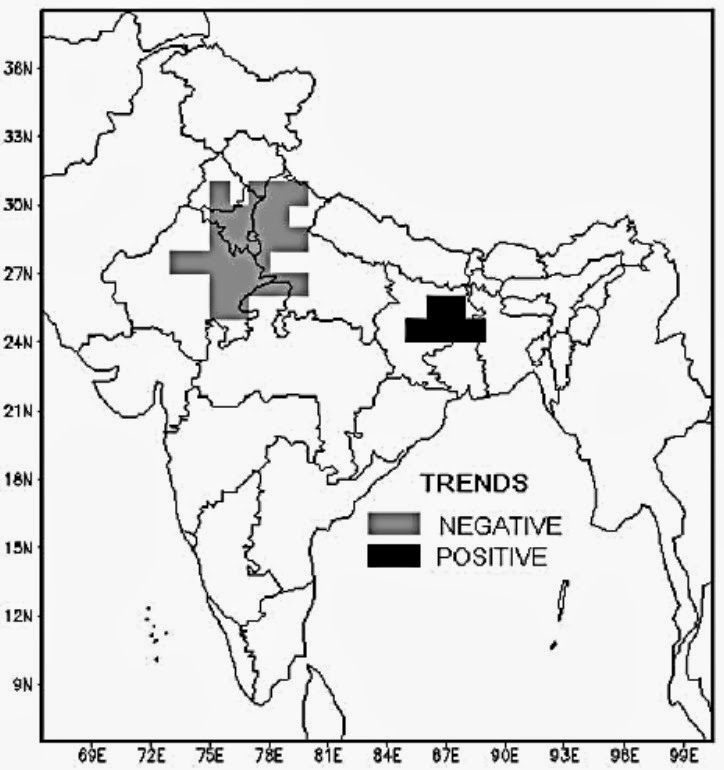
Figure 1 - GA analysis showing strong and negative
trends in rainfall (Niyogi et al., 2010)
Niyogi et al. (2010) employed an Empirical Orthogonal Function (EOF) approach to explore climatic trends within the South Asian monsoon region. They found that there been significant increases in summer rainfall over east India and reductions over north and north-west India over the last five decades. Interestingly two north-western states most affected by an intensification of irrigated agriculture since the 1960s, Punjab and Haryana, have experienced significant reductions in surface sensible heat flux leading to a reduction in rainfall (Douglas et al., 2006). Niyogi et al. (2010) performed additional Genetic Algorithm (GA) analysis, the use of which ties spatial patterns to strong temporal trends, which confirmed the same result (Figure 1). This trend has been linked to an increase in soil moisture and vegetation changes, both of which can effect the radiation balance, causing regional surface cooling (Niyogi et al., 2010) along with changing regional convection (Douglas et al., 2006). 

The culprit for the increase in soil moisture is the increased use of groundwater irrigation; the area utilised for paddy cultivation tripled during 1960-1990, with much of it occurring in the premonsoon season (up to 4 weeks earlier than in the past) due to the diminishing reliance on monsoon rains to kick-start the growing season. Bringing the growing season forward increases the normalized differential vegetation index at a crucial stage of monsoon circulation evolution. Through increased albedo, the intensity of the negative pressure anomaly can reduce and thus weaken the pressure gradient, influencing rainfall amount and distribution (Niyogi et al., 2010). Other factors such as urbanization could also influence the precipitation, however Kaufmann et al. (2007) demonstrate this effect reduces rainfall, but not during the summer monsoon as the mechanism overwhelms local urban effects. Arguably it is the intensification of agriculture and the associated surface feedbacks where the evidence is most compelling. Indeed, Douglas et al. (2006) suggest that monsoonal rainfall variability is regulated by antecedent land surface conditions. 

Due to the complexities of the South Asian monsoon system and the relatively youthful nature of this area of study, it is difficult to definitively attribute the changes in the monsoon to land-use change, although there is compelling evidence of its influence. Arguably, it is the role of land-use changes in exacerbating monsoonal effects, as opposed to their effect of upon the monsoon itself, that are of greatest importance. With the population increasing rapidly and the country getting no bigger, the proportion of the population living in 'at risk' areas may increase, and as a result the extent of our influence could become evermore significant.